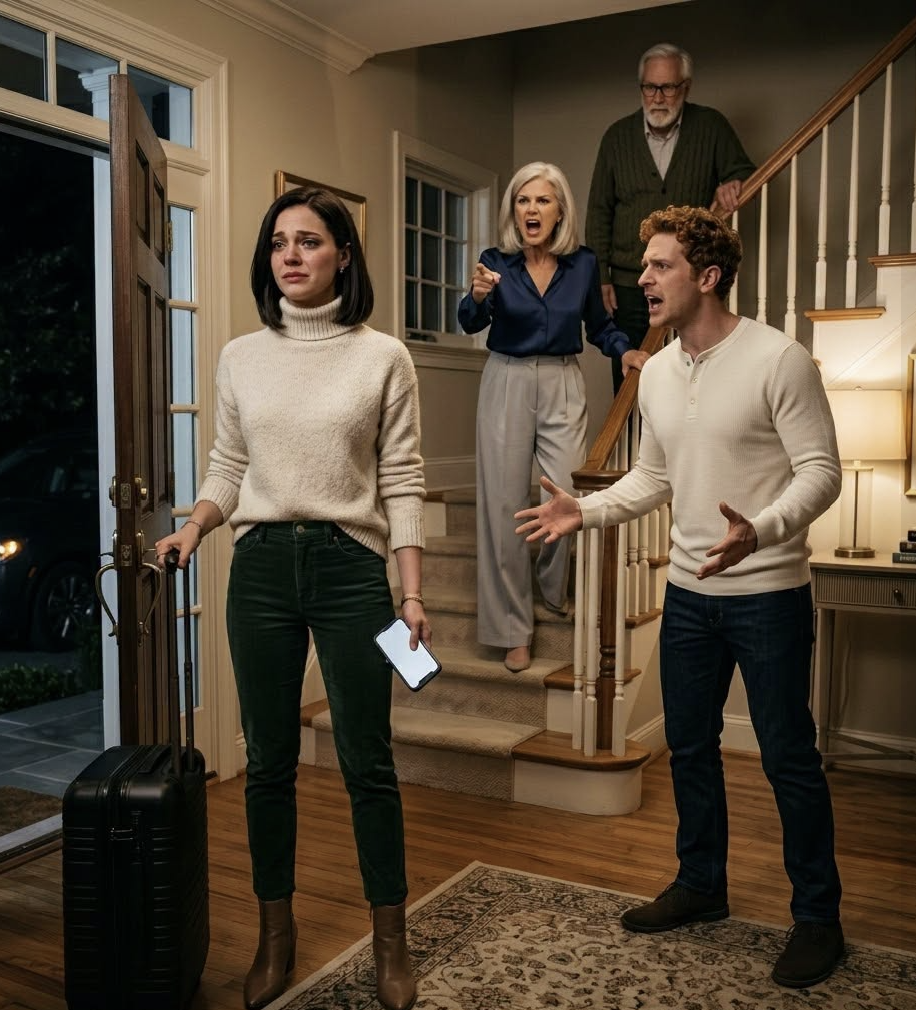
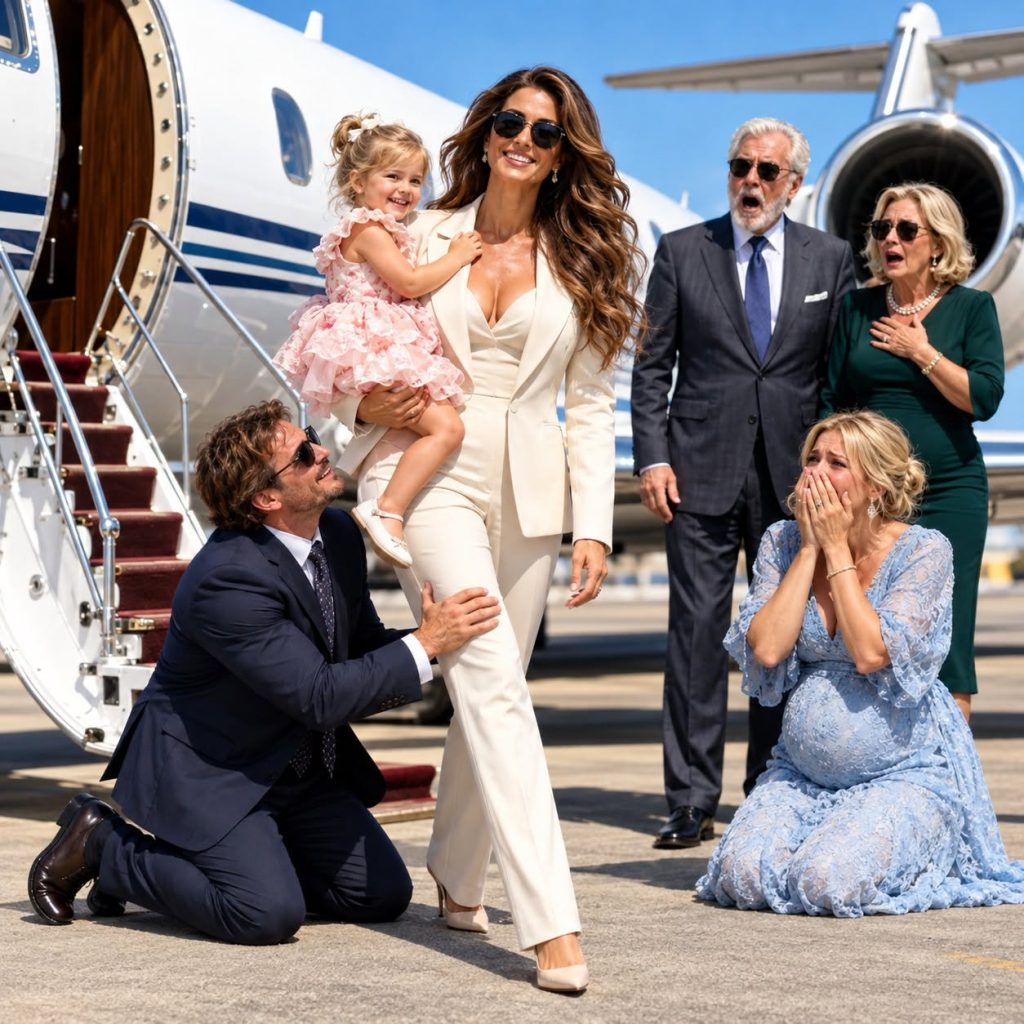
Six months later, workers replaced the enormous ASHFORD MEDICAL GROUP sign outside headquarters.
Marisol stood beside me.
Caleb had finished an overnight shift and looked half asleep, but refused to miss it.
Victoria stood several yards away.
Our relationship remained uncertain.
She called sometimes.
I sometimes answered.
Healing didn’t look like television.
There were no magical embraces.
No erased decades.
There were boundaries.
Awkward coffees.
Angry conversations.
Moments when I wanted her gone.
Moments when I caught myself asking whether she had eaten.
Maybe someday that would become something.
Maybe it wouldn’t.
For now, truth was enough.
The crane lifted the new sign.
MORALES HEALTH FOUNDATION.
Below it, smaller lettering read:
Care Before Status.
People Before Legacy.
Marisol cried.
Caleb slipped an arm around her.
“You like it?”
“It’s too much.”
“No,” he said.
“It’s about right.”
I looked at my son.
Twenty-one years earlier, people had described him as my mistake.
My disgrace.
My ruined future.
Instead, he became the reason I survived long enough to create one.
Caleb looked at me.
“So what happens to the fifty?”
I smiled.
I had thought about framing it.
Burning it.
Returning it.
Instead, I donated it.
Not to a museum.
Not to the foundation.
I gave it to St.
Anne’s shelter.
They placed it inside a simple frame near the intake desk.
Beneath it was a small plaque.
It didn’t mention Richard.
It didn’t mention the Ashford family.
It simply said:
SOMETIMES ALL A PERSON NEEDS IS ONE CHANCE TO SURVIVE THE NIGHT.
GIVE THEM MORE THAN THIS.
And every winter, the Morales Health Foundation funded emergency housing there for pregnant teenagers and young mothers.
No questions about family names.
No lectures about shame.
No one was told to disappear.
One snowy evening that December, I stopped by the shelter.
A seventeen-year-old girl sat near the entrance clutching a duffel bag.
Her mascara had run down her cheeks.
She looked terrified.
For a moment, I saw myself.
Not metaphorically.
I saw the whole girl.
Frozen fingers.
Wet shoes.
A baby moving inside her.
A fifty-dollar bill in the snow.
I sat beside her.
She wiped her face quickly.
“I’m sorry.”
“For what?”
“I don’t know.”
That nearly broke me.
I handed her a cup of hot chocolate.
“You don’t have to apologize for existing.”
She looked at me suspiciously.
“My parents kicked me out.”
I nodded.
“I know what that’s like.”
“You do?”
“Yeah.”
“What happened?”
I looked through the window.
Snow drifted beneath the streetlights.
“My life started.”
Her eyebrows pulled together.
I smiled.
“It hurt like hell first.”
She laughed through her tears.
Then she placed both hands around the warm cup.
“Did you ever forgive them?”
I thought about Richard.
Retired now.
Living quietly.
He occasionally sent letters.
I had answered one.
Victoria was trying.
Caleb had agreed to have lunch with her twice.
Nothing was perfect.
Nothing needed to be.
“I learned something more important than forgiveness,” I told the girl.
“What?”
“Someone can reject you without getting the right to define you.”
She stared at the floor.
I continued.
“People confuse abandonment with a verdict.
It isn’t.
It’s a decision someone else made.”
She looked at me.
“And what if they’re your parents?”
“Then it hurts more.”
“What if they never come back?”
“Build something beautiful anyway.”
She cried.
I held her hand.
And suddenly I understood the final gift my parents had unintentionally given me.
They had taught me exactly what family wasn’t.
So I spent the rest of my life learning what it was.
Family was Marisol crossing a shelter floor toward a freezing stranger.
Family was Caleb waiting outside an operating room.
Family was telling the truth even when the truth hurt.
Family was not blood.
Not prestige.
Not inheritance.
Not surnames carved into marble buildings.
Family was who stayed when staying cost something.
I stood to leave.
The framed fifty-dollar bill hung beside the door.
For twenty-one years, I had thought that bill represented the night my father decided I was worth nothing.
I understood it differently now.
It represented the price of my freedom.
Richard threw fifty dollars into the snow because he believed he was ending my life.
Instead, he accidentally paid for the first step toward everything I became.
A doctor.
A mother.
A leader.
A woman who no longer needed his approval.
And as I walked outside, Caleb was waiting beside my car.
Snow landed in his dark hair.
“You ready, Mom?”
I looked at him.
At the boy they rejected.
At the doctor he became.
At the man who had been offered millions of dollars for his conscience and refused.
I smiled.
“Yeah.”
He opened my door.
Then he noticed the shelter behind me.
“You okay?”
I looked once more at the falling snow.