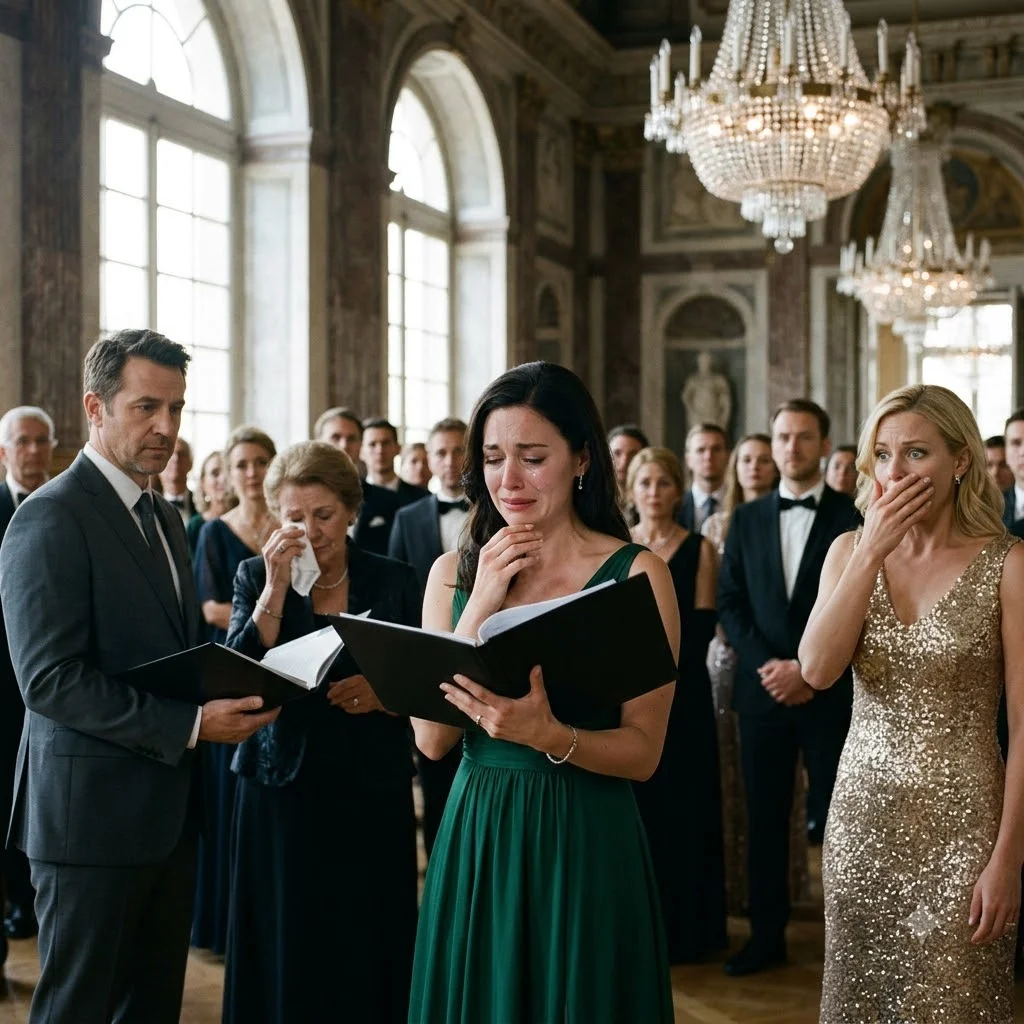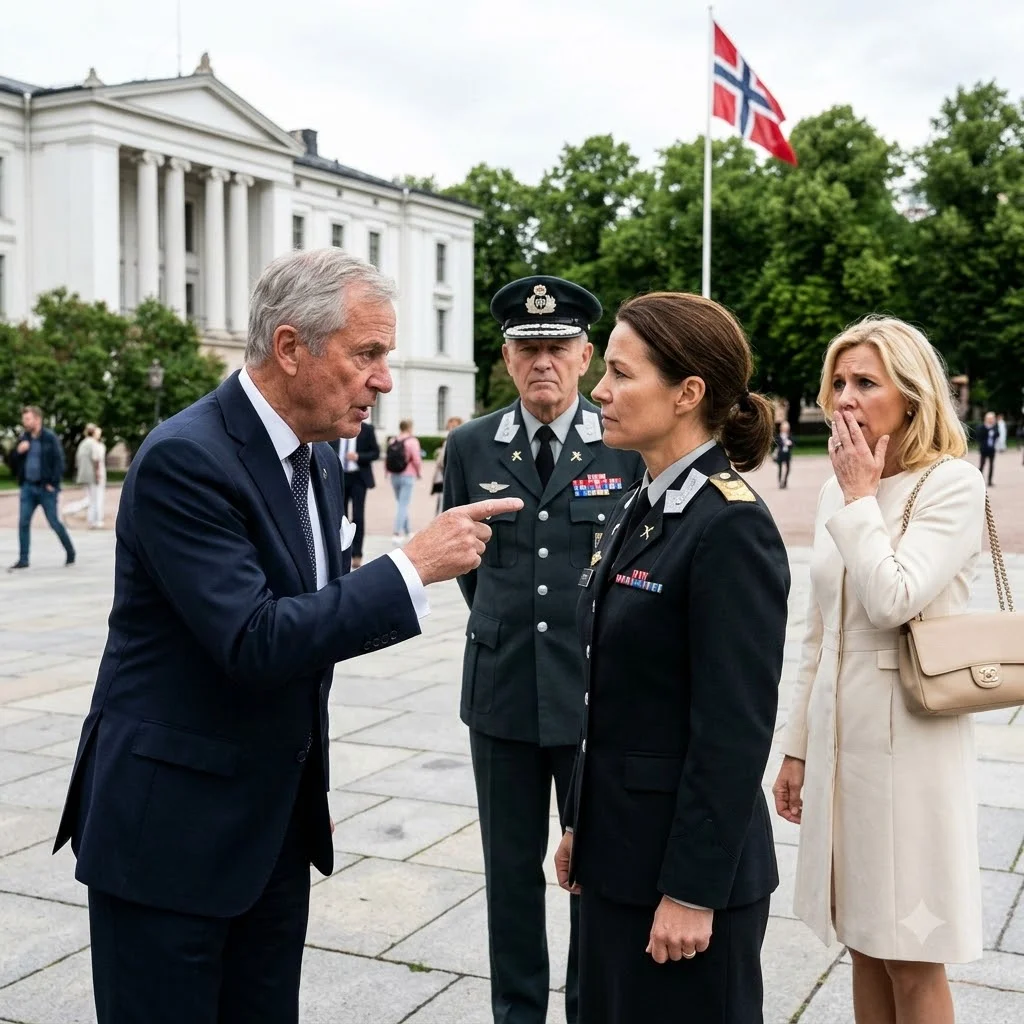
My father recognized me beneath the White House colonnade after twenty-six years and immediately told me to stand somewhere else. “Keep your distance,” Victor Prescott hissed, straightening the cuff of his expensive suit. “People will think you’re with us.”
I was wearing my Army dress uniform, with a colonel’s insignia on my shoulders and ribbons he’d never bothered to learn about. Beside him stood my younger sister, Tess, who had been twelve the last time I saw her, and a woman he introduced as his wife without looking at me.
“Hello, Dad,” I said. My voice sounded steadier than I felt, although the fingers holding my invitation had gone numb.
I’m Colonel Anna Prescott, forty-four, and at eighteen I accepted an Army ROTC scholarship instead of the business-school place my father had arranged. He owned a multibillion-dollar manufacturing company and had already chosen my office, salary, and future husband before I graduated high school.
“You walk out to play soldier, you walk out of this family,” he told me on our front steps. My mother stood behind the screen door with my lunch packed in a paper bag, crying so quietly that I could hear the porch light humming.
I went anyway. Over twenty-six years, there were freezing training mornings, deployments, missed birthdays, and soldiers whose names I still said aloud when I couldn’t sleep; there was also a team that trusted me and work I would never have traded for an inheritance.
That afternoon I was at a White House reception honoring military service and the families who supported it. Dad had been invited as a prominent civilian philanthropist, and I hadn’t known his name was on the guest list until I heard him laughing behind me.
Tess studied my uniform. “Anna?” she whispered, and took one uncertain step forward.
Dad caught her elbow. “Don’t start,” he said. “We’re here to celebrate people who’ve actually contributed something.”
I felt eighteen again, standing on those front steps with a paper bag growing damp in my hands. Then I heard footsteps on the stone, and four-star General Daniel Mercer crossed the courtyard toward us.
He stopped directly in front of me. “Colonel Prescott, the families you’ve been asking about are waiting inside,” he said warmly. “They brought photographs from the evacuation.”
My father straightened, ready to introduce himself, but the general was still speaking to me.
“Those seventy-three service members came home because you refused to leave them behind,” he said. “Tonight, they want the country to know your name.”
Then Tess looked at Dad and asked the question he had spent twenty-six years avoiding: “You told me she never finished training. Why did you lie?”
The general didn’t ask my father for an explanation. He simply offered Tess a polite nod and led me toward the doors, where several of the people from that evacuation were waiting with their families. I recognized Sergeant Luis Moreno by the way he leaned on his left leg, and when his daughter pressed a crayon drawing into my hand, the medals on my chest suddenly seemed much less important.
Six years earlier, during a chaotic overseas evacuation, our convoy had been ordered to withdraw after a bridge became impassable. I had stayed with my team to coordinate another route, and seventy-three service members had reached safety after a long night I still remembered mostly through radio static, diesel fumes, and the sound of somebody calling for a missing friend.
No one there called me a billionaire’s daughter. Luis hugged me carefully and said, “My little girl turns nine next week because we got home.” I had to look at the drawing twice before I could answer him.
At the ceremony, General Mercer spoke about teamwork, not one heroic person. I was grateful for that; two soldiers who had helped make the evacuation possible were no longer alive, and their families were among those who’d brought photographs.
Afterward Tess found me beside a window overlooking the lawn. “Dad told me you quit before you finished officer training,” she said, holding her clutch with both hands. “He said you never wrote because you were ashamed.”
“I sent you birthday cards until you turned twenty-one,” I answered. “After that, I stopped because every envelope came back unopened.” Tess pressed her lips together and whispered, “I never saw one.”
She touched the tiny silver star on my ribbon rack without quite reaching it. “I waited by the mailbox every birthday,” she said. “Dad said you had forgotten me.” For years I’d imagined her refusing to read my cards; I had never once imagined she was waiting for them.